Labor Day is a 131-year-old tradition in the United States, providing citizens with an opportunity to reflect on the contributions of the American worker.
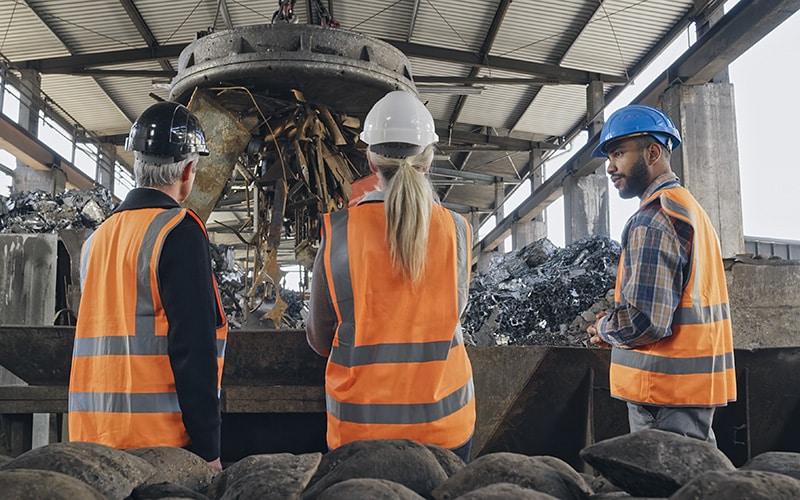
In the scrap metal recycling industry, worker safety has long been a top priority. As people get ready to celebrate Labor Day, recyclers are focusing on ways to make scrapyards a safer environment for all employees. Technology has helped the recycling industry make tremendous strides in worker safety. In this regard, the scrap metal recycling industry has much to celebrate.
The First Labor Day
On June 28, 1894, Congress passed an act marking the first Monday in September every year as a federal holiday to celebrate the social and economic achievements of the American worker, according to the U.S. Department of Labor (DOL) website. During the late 19th century, labor supporters had been advocating for a holiday to recognize the contributions of American workers to the country’s strength, prosperity and well-being.
The scrap metal recycling industry is among the many industries that has been in existence since that first Labor Day years ago. Since the original Labor Day, the industry has worked to improve the wellbeing of its workforce. Many advances in health and safety have taken place over the years, but in recent years technology has helped fuel the greatest improvements in workplace safety.
Technology Improving Worker Safety
Drones are one tech advancement protecting workers, according to a recent article in Metals Mining Review. Drones can detect safety problems like fire hazards and leaks in stacks of scrap metal. Equipping drones with light detection and ranging technology (LiDAR) and sensors can flag potential hazards.
Artificial intelligence (AI) and robotics are automating the most hazardous tasks, reducing worker exposure to dangerous conditions. AI can also analyze sensor data to alert staff to potentially dangerous situations like the presence of explosive materials.
Another safety concern is that scrapyards are susceptible to fires. For the past several years, industry associations and government agencies have been offering guidance to help reduce the number of yard fires. Back in 2008, the Occupational Safety and Health Administration (OSHA) published “Guidance for the Identification and Control of Safety and Health Hazards in Metal Scrap Recycling” that included guidelines to avoid scrapyard fires. In 2021, the Recycled Materials Association (ReMA), formerly known as ISRI, published a report offering guidance to help recyclers reduce the number of yard fires.
Infrared (IR) cameras and aspiration smoke detector (ASD) systems are also new technologies that are more effective than traditional smoke detectors. They can detect rising temperatures and smoke particles that indicate a fire hazard.
In addition to guidance for avoiding fires, the OSHA document also addresses exposure to toxic metals, safeguards for those working with dangerous equipment, and noise level protection, among other things.
Contributions of Scrap Metal Recycling Industry Workers Today
The scrap metal recycling industry’s workforce has contributed to its success. Scrap metal recyclers in return have worked to provide good-paying jobs and improve working conditions over the decades. Today, the recycling industry is a source of “green jobs,” according to the U.S. Bureau of Labor Statistics, meaning that a career in recycling is recognized to contribute both to the economy and the environment.
According to statistics compiled by the Institute of Scrap Recycling Industries (ISRI) 2021 Economic Impact Study:
- Some 159,640 jobs are directly supported by recycling and brokerage operations of recycling industries in the U.S.
- These jobs pay an average of $77,300 in wages and benefits to U.S. workers.
- Additionally, there are 346,499 jobs throughout the U.S. economy that are indirectly supported by the recycling industry through suppliers and the indirect impact of the industry’s spending.
The above statistics include businesses recycling all materials, such as paper, plastic, glass, and scrap metal. IBIS World, an industry research firm, reported that for scrap metal recycling there were:
- Some 43,667 scrap metal recycling employees in the United States.
- The scrap metal recycling industry has had 5.6 percent annualized employment growth from 2017 to 2022.
- Scrap metal recycling wages in the U.S. totaled $3.3 billion in 2022.
- This amounts to a 6.9 percent increase in wages annualized from 2017 to 2022.
Over the decades, industry associations have offered guidance and tools for improving workplace practices and procedures so they can be injury free. Industry standards now include enhanced employee training, personal protective equipment, rigorous equipment maintenance and hazard labeling and signage standards. With mottos like “Safely or not at all,” recyclers have made worker safety a top priority. The National Waste and Recycling Association (NWRA), the Solid Waste Association of North America (SWANA) and ReMA provide resources to help promote and facilitate the safety of recycling industry workers.

About ScrapWare Corporation: Since 1989, Rockville, Maryland-based ScrapWare Corporation has been the software of choice for the recycling industry. Its ease of installation and simplicity saves users time and money while helping them achieve compliance and maintain accurate business insights. With state-of-the-art functionality tailored to each organization’s unique requirements, ScrapWare is an advanced dynamic software solution that alleviates the most pressing recycling industry worries. For more information, please call (301) 517-8500 or visit https://www.scrapware.com/.